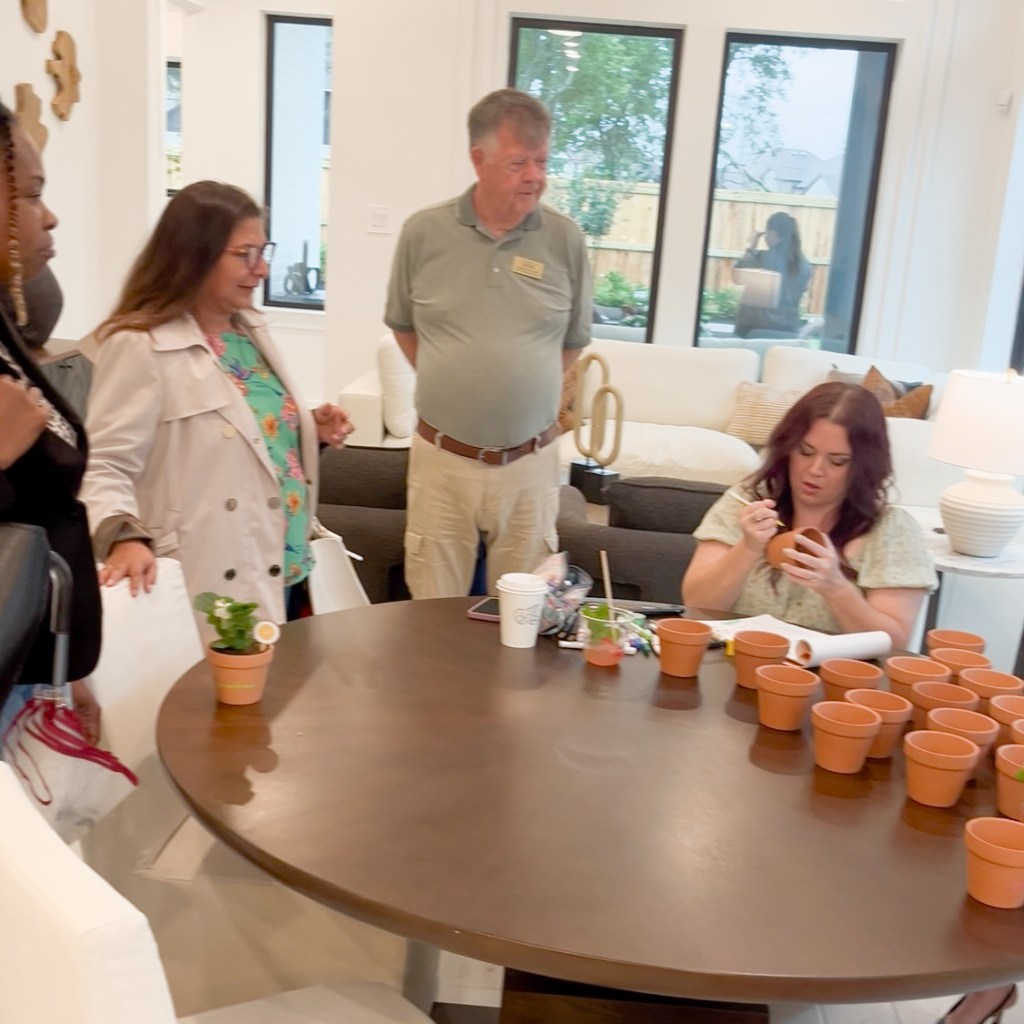
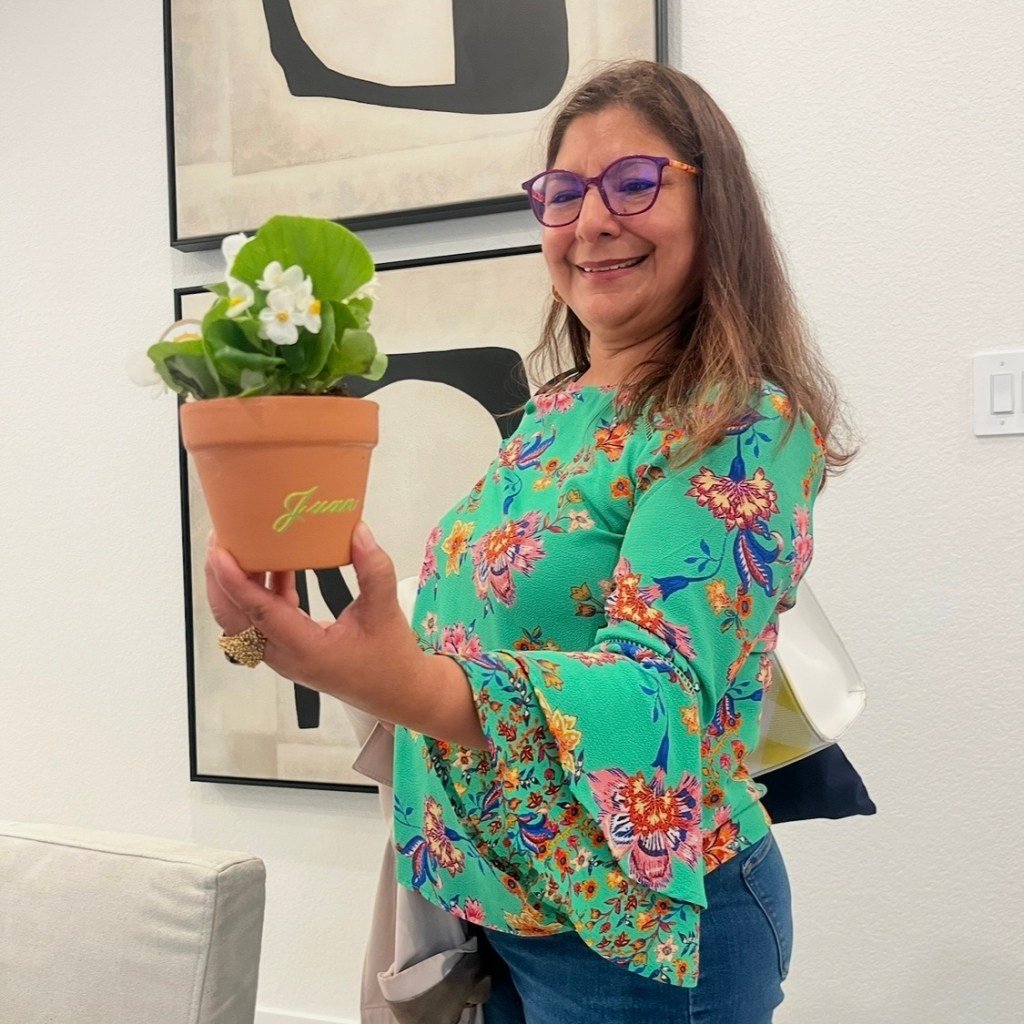
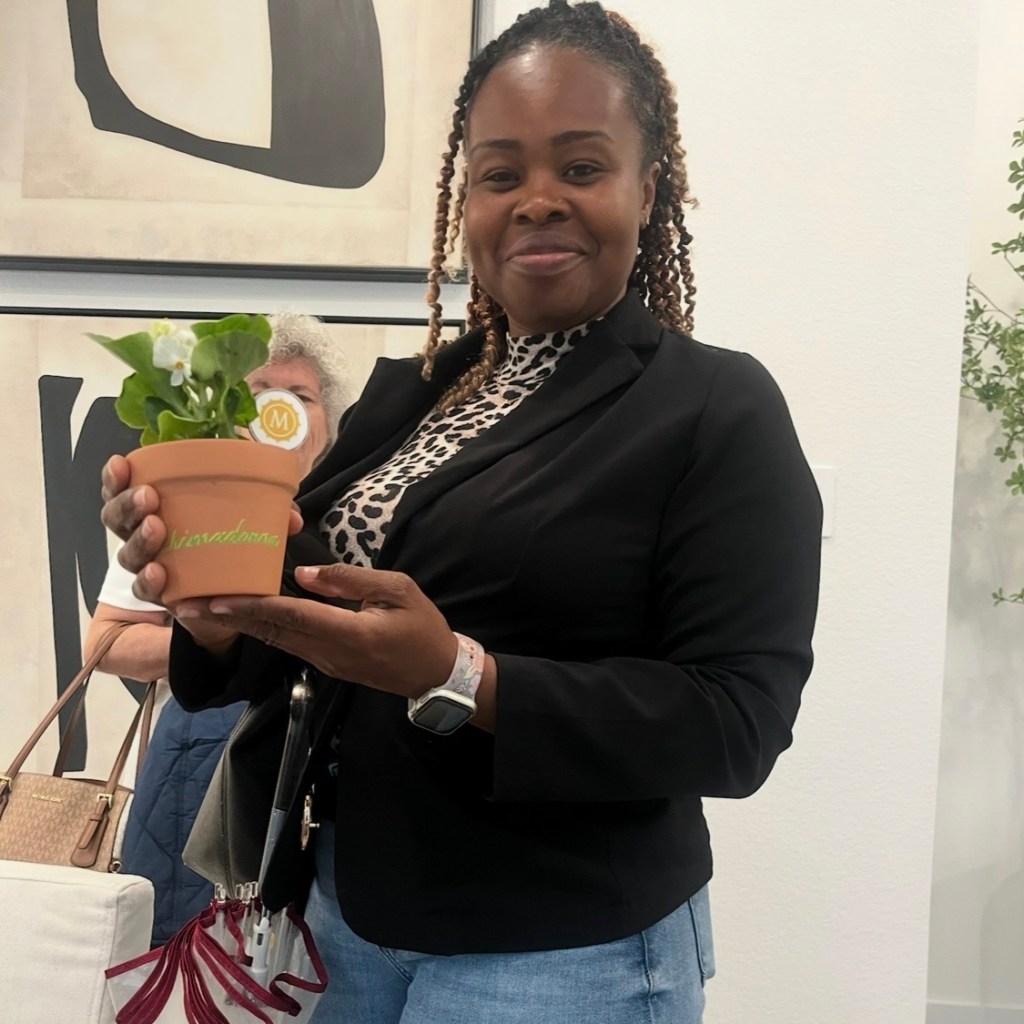
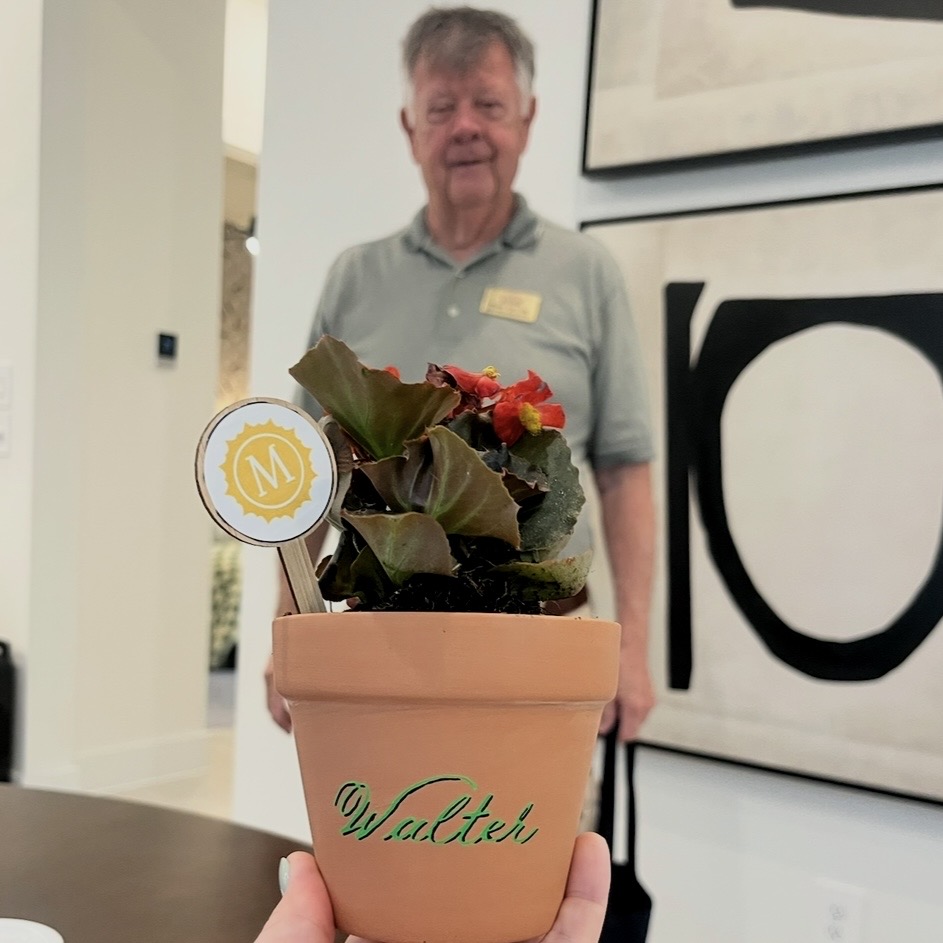
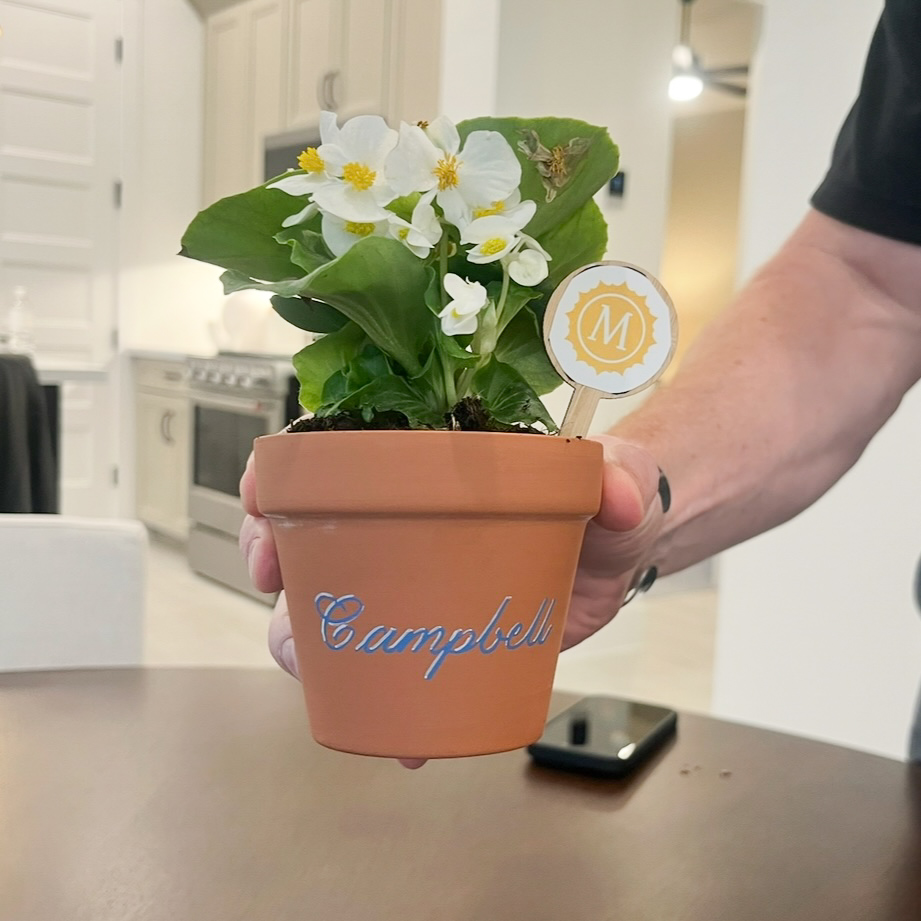
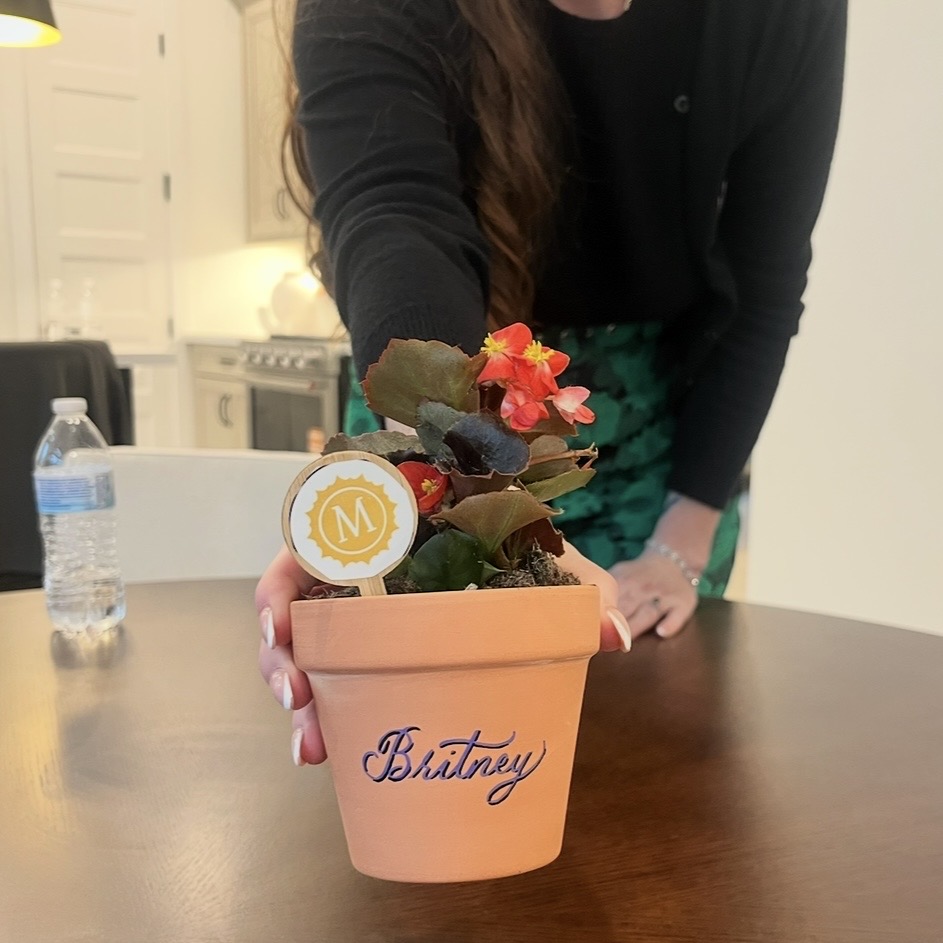
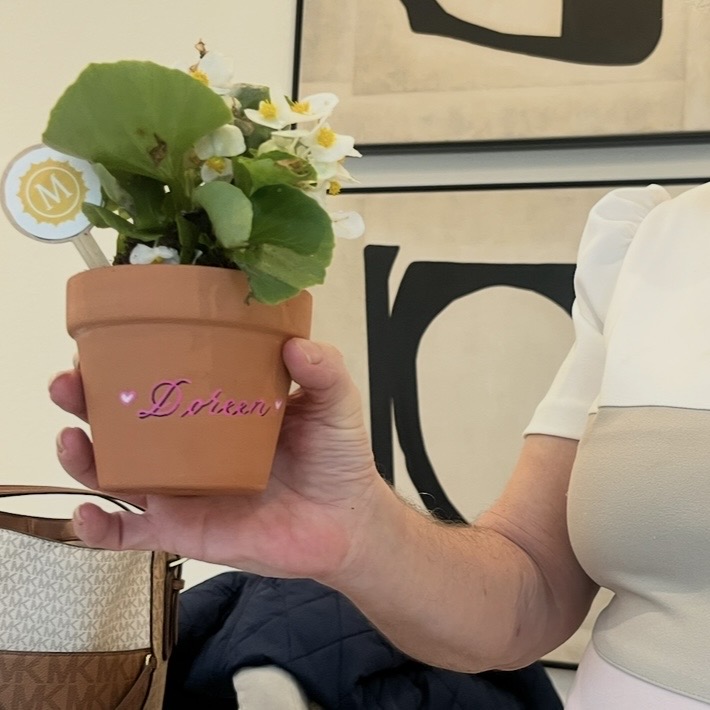
At a recent open house event at Meridiana, I sat at a table hand-lettering names onto terra-cotta pots with paint pens while people moved through the space around me.
And even now, in a world built for speed and convenience, people still stopped.
Not briefly, either.
They gathered around the table. They mingled and watched while names were written out by hand. Phones came out to record the process. Conversations started between strangers standing nearby.
Some people stayed long after their pot was finished just to keep watching.
And honestly, I don’t think it was really about the flower pots.
There’s Something Grounding About Watching Something Be Made by Hand
The movement slows people down. The visible concentration. The slight variations in each letter. The understanding that what’s being created only exists because another person is physically there making it in real time.
Maybe because we’re all craving something real, in real time.
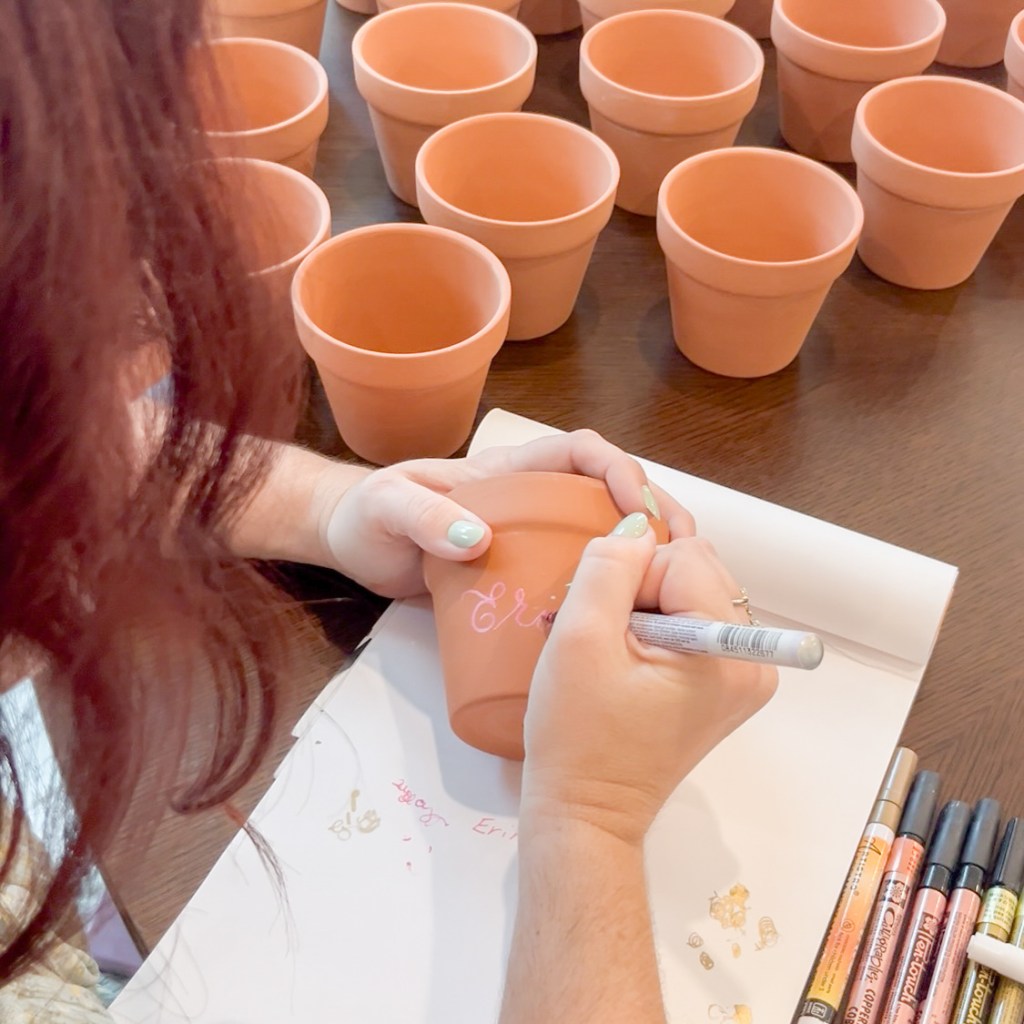
People Still Gather Around Handmade Work
We live in a world increasingly shaped by automation, passive scrolling, mass production, and digital perfection.
Almost everything now is optimized for speed.
Instant ordering. Instant editing. Instant communication. Instant replication.
And yet, despite all of it, people still physically gather around a table to watch someone write by hand.
That feels significant to me.
Slowness Feels Different Now
I notice it at almost every event.
People don’t just glance over and move on. They pause.
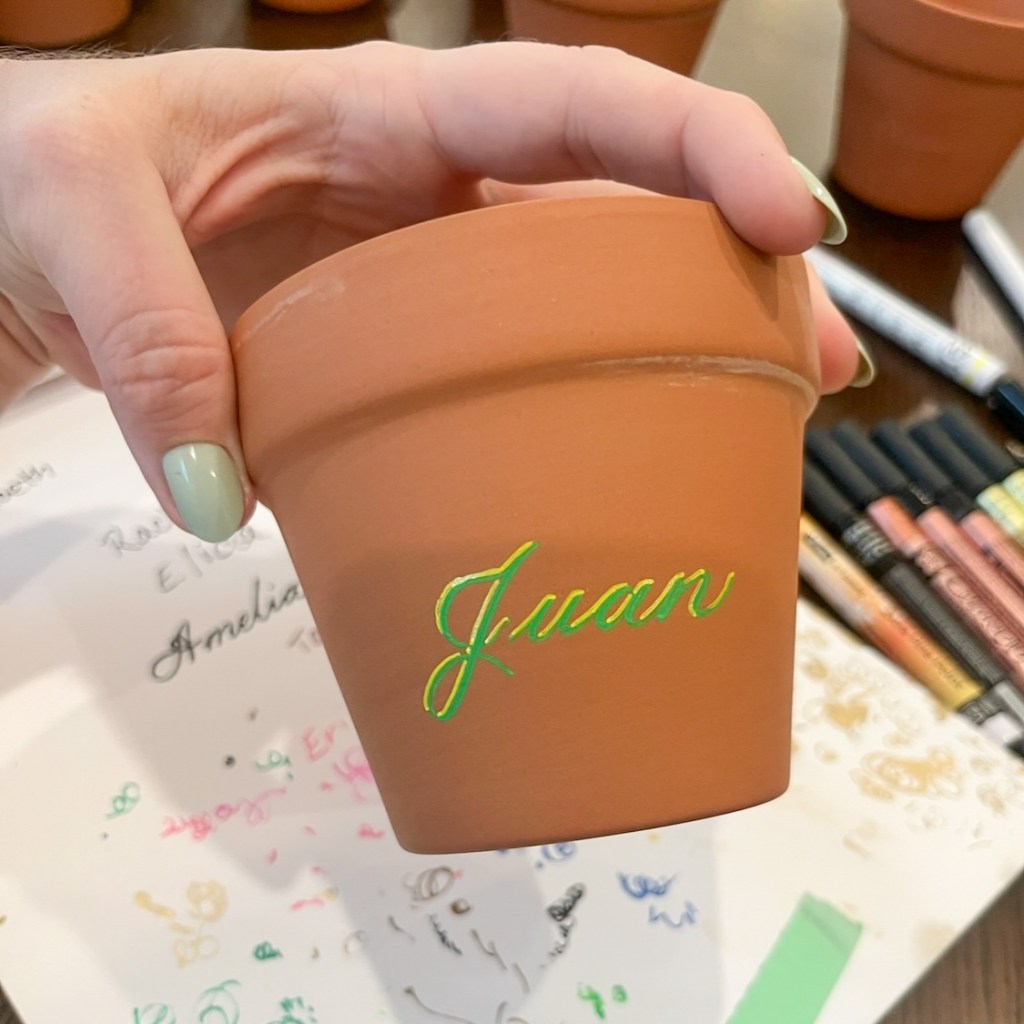
Sometimes they lean in close to watch the movement of the pen. Sometimes they ask questions about the materials or the process. Sometimes they simply stand there quietly, watching the work happen in real time.
Not because the process is fast.
But because it isn’t.
There’s something almost disorienting now about witnessing slowness on purpose. Watching something unfold gradually instead of instantly appearing finished.
Especially in live personalization work, people are not just receiving an object. They are witnessing its creation. They watch their own name take shape letter by letter, one movement at a time.
And somehow, that changes the emotional weight of the object itself.
The Human Hand Leaves Evidence
I think that’s part of why handmade work still resonates so deeply with people.
Not because it’s flawless, but because it isn’t.
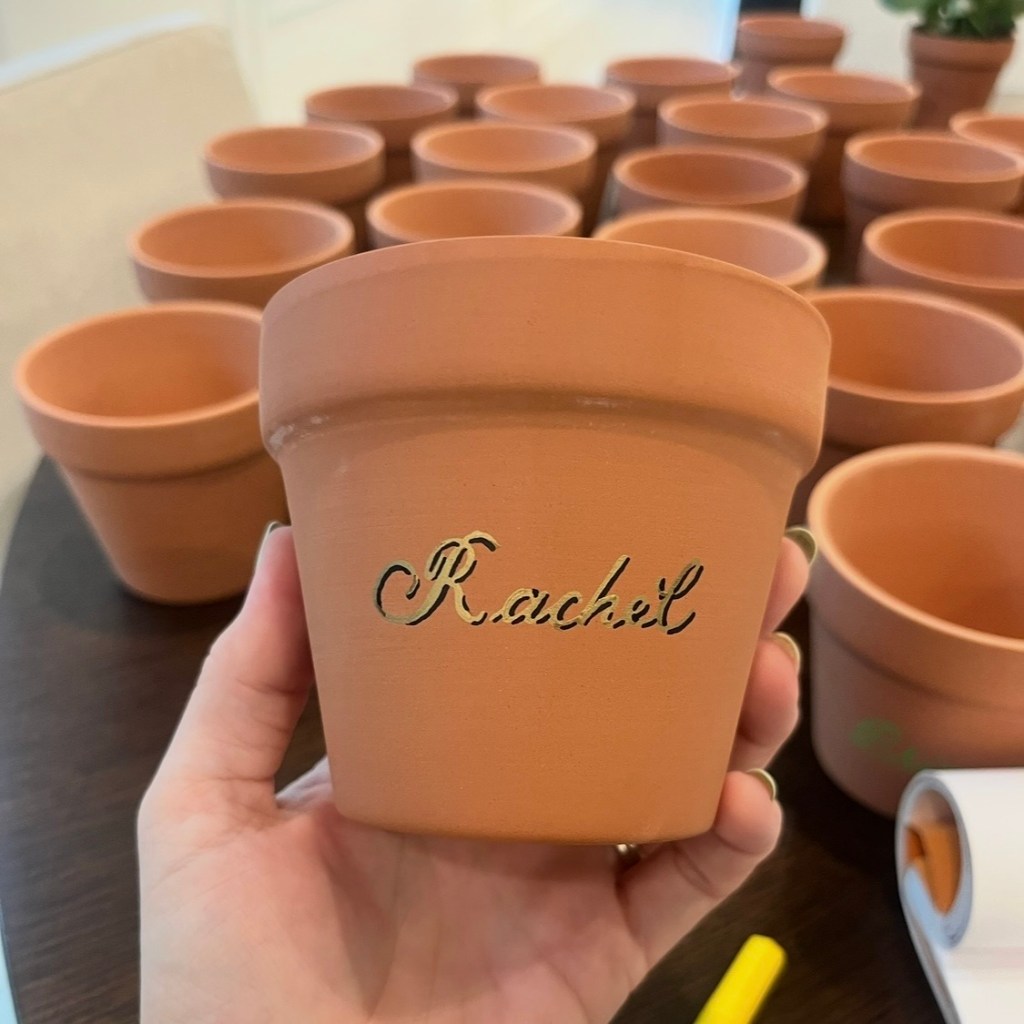
The texture of terra cotta. The pressure changes in handwriting. The slight inconsistencies that happen naturally when something is made by a person instead of produced by a machine.
These things carry evidence of humanity inside them.
And people still respond to that instinctively.
Why the Terra-Cotta Pots Felt Different
At the Meridiana event, the terra-cotta pots themselves felt like part of the philosophy.
Earthy. Textured. Imperfect. Warm in your hands.
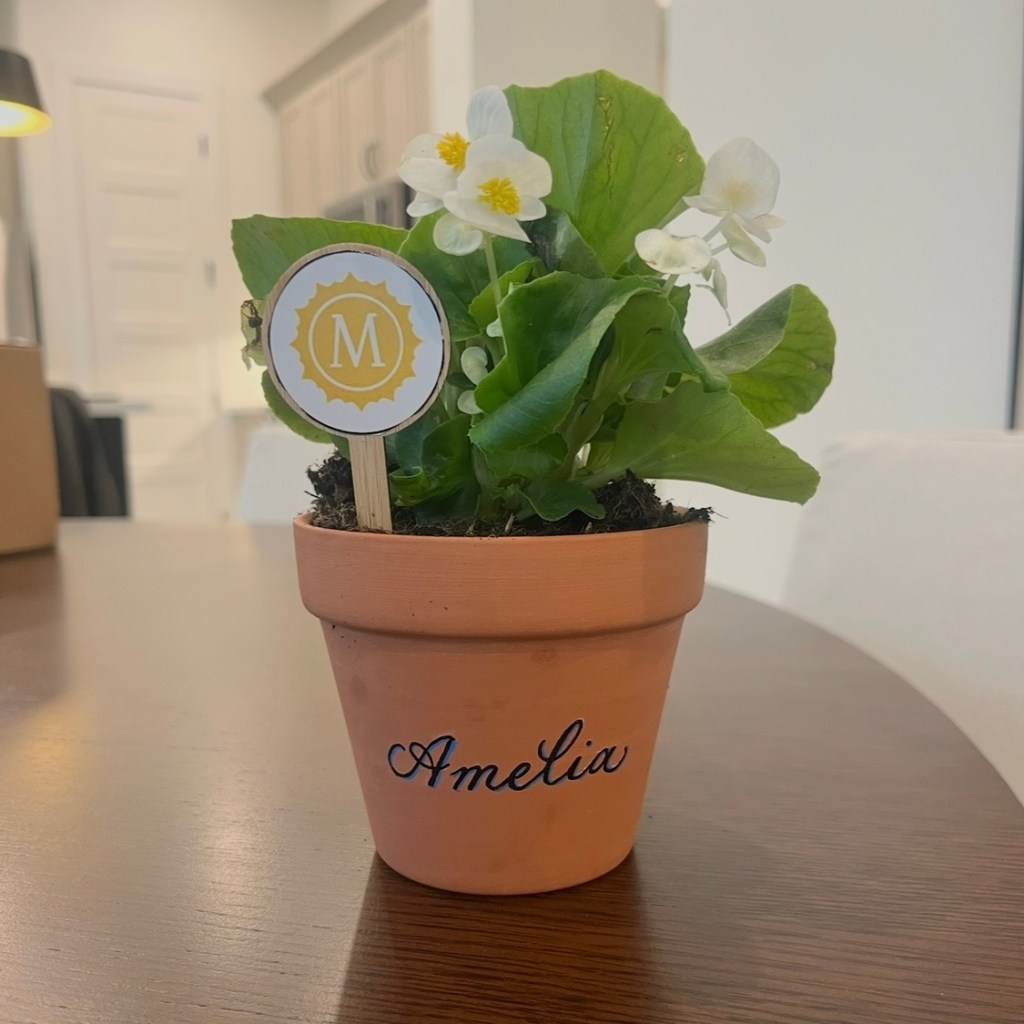
Nothing about them felt overly polished or mass manufactured. And because of that, the personalization somehow felt even more human.
Not like branding layered onto an object, but like one person carefully creating something for another person in real time.
The Human Hand Is Becoming More Visible, Not Less Valuable
The more technology advances, the more noticeable the human hand seems to become.
Not less valuable.
More.
Because in a world full of polished sameness, people still crave texture. Presence. Evidence of care. Small irregularities that remind them something was made intentionally rather than generated instantly.
Maybe that’s why people still stop for handmade things.
Not because they’re old-fashioned.
But because they still feel alive.
Ready to Create Something Meaningful?
If you’re drawn to handcrafted experiences, live personalization, and details that feel thoughtful, tactile, and deeply human, I would love to create something for you.
You can explore more of my work on the Wofford Calligraphy homepage, learn more about custom and live personalization services, or reach out through the contact page below to start the conversation.


Leave a comment